

The quality of PVC tape can vary significantly due to a multitude of factors, which have a direct bearing on its performance, durability, and overall suitability for different applications. As a PVC tape supplier, I have witnessed firsthand how these variations can impact the end - user experience. In this blog, I will delve into the key aspects that influence the quality of PVC tape.
Raw Materials
The quality of raw materials is the cornerstone of high - quality PVC tape. PVC resin, which is the primary component of PVC tape, can vary in terms of its purity, molecular weight, and additives. High - purity PVC resin generally results in a tape with better clarity, flexibility, and chemical resistance. For example, a PVC tape made from low - grade resin may have a cloudy appearance and be more prone to cracking or breaking under stress.
Additives are also crucial in determining the tape's properties. Plasticizers are added to increase the flexibility of the tape. However, the type and amount of plasticizers can affect the quality. If too much plasticizer is used, the tape may become overly sticky and deform easily over time. On the other hand, insufficient plasticizer can make the tape rigid and less adaptable to different surfaces.
Antioxidants and UV stabilizers are added to protect the tape from oxidation and UV damage, respectively. Tapes that are used outdoors or in environments with high UV exposure require a sufficient amount of these additives to maintain their integrity over time. A tape lacking proper UV stabilizers will fade, become brittle, and lose its adhesive strength when exposed to sunlight for extended periods.
Manufacturing Process
The manufacturing process of PVC tape is complex and involves several steps, each of which can impact the final product quality. Extrusion is the first critical step where the PVC resin and additives are melted and formed into a thin film. The temperature, pressure, and speed during extrusion need to be precisely controlled. If the extrusion temperature is too high, the PVC may degrade, resulting in a weaker tape. If it is too low, the tape may not have a uniform thickness or may contain defects.
Coating the adhesive onto the PVC film is another crucial step. The type of adhesive used, its viscosity, and the coating method all play a role in the tape's adhesive strength. A well - coated adhesive should provide a strong bond to various surfaces without leaving residue when removed. Inadequate coating may lead to uneven adhesion, which can cause the tape to peel off easily or not stick at all in some areas.
Curing is the final step in the manufacturing process. During curing, the adhesive and the PVC film bond together, and the tape reaches its optimal properties. The curing time and temperature need to be carefully regulated. A tape that is under - cured may have a weak bond between the film and the adhesive, while over - curing can make the tape brittle.
Applications and Their Quality Requirements
Different applications of PVC tape demand different quality standards. Let's explore some common types of PVC tape and their specific quality criteria.
PVC Packing Tape
PVC Packing Tape is widely used for sealing packages. For this application, the tape needs to have good tensile strength to withstand the stress during handling and transportation. It should also have a strong and reliable adhesive that can hold the package together without peeling off easily. Additionally, the tape's appearance is important, as it often serves as a part of the package's branding. A high - quality packing tape will have a smooth surface, consistent color, and sharp edges.
PVC Lane Marking Tape
PVC Lane Marking Tape is used on roads, parking lots, and industrial floors. This tape must be highly durable, as it is exposed to heavy traffic, weather conditions, and abrasion. It should have excellent UV resistance to prevent fading and maintain its visibility over time. The adhesive of lane - marking tape needs to be strong enough to adhere firmly to the surface, even under the pressure of vehicle tires.
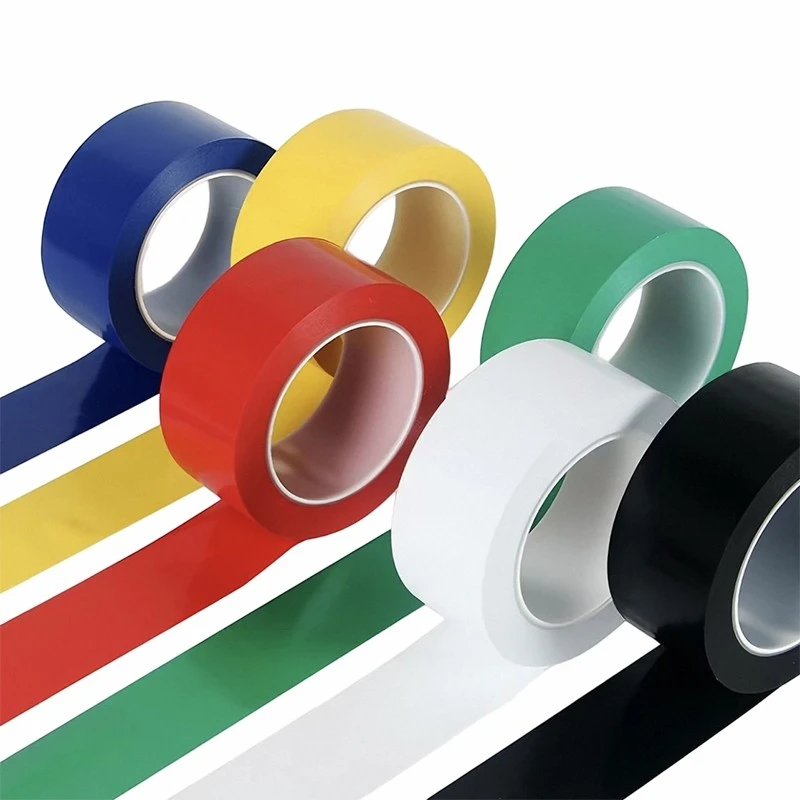

Coloured PVC Tape
Coloured PVC Tape is used for various purposes, such as color - coding, decoration, and identification. The quality of coloured PVC tape is mainly determined by the color fastness and the smoothness of the color coating. High - quality coloured tape will have vibrant, long - lasting colors that do not fade or bleed. The tape should also be easy to cut and apply, with a consistent thickness and width.
PVC Builders Tape
PVC Builders Tape is commonly used in construction for masking, protecting surfaces, and marking. It needs to have a strong adhesive that can stick to rough surfaces, such as concrete and wood, without leaving residue when removed. The tape should also be tear - resistant and able to withstand harsh environmental conditions, such as dust, moisture, and temperature variations.
Barriere Tape
Barriere Tape is used for creating barriers, such as in crime scenes or restricted areas. This tape needs to be highly visible, often with bright colors and clear markings. It should have good tensile strength to prevent it from breaking easily when stretched. The adhesive should be strong enough to hold the tape in place for an extended period.
Quality Control and Testing
To ensure the quality of PVC tape, strict quality control measures and testing are essential. At our company, we conduct a series of tests at various stages of the manufacturing process.
Physical tests are performed to measure the tape's thickness, width, and tensile strength. Thickness and width need to be consistent throughout the roll to ensure uniform performance. Tensile strength testing determines how much force the tape can withstand before breaking, which is crucial for applications where the tape is subjected to stress.
Adhesive tests are carried out to evaluate the tape's bonding strength and adhesion to different surfaces. We measure the peel strength, which is the force required to peel the tape off a surface, and the shear strength, which measures the tape's resistance to slipping when a force is applied parallel to the surface.
Environmental tests are also important, especially for tapes that are used outdoors or in harsh conditions. These tests simulate UV exposure, temperature variations, and humidity to assess the tape's durability over time.
Conclusion
The quality of PVC tape varies depending on raw materials, manufacturing processes, and application requirements. As a PVC tape supplier, we are committed to providing high - quality products that meet the diverse needs of our customers. By using the best raw materials, implementing strict manufacturing controls, and conducting comprehensive quality testing, we ensure that our tapes perform as expected and provide long - lasting value.
If you are in the market for PVC tape and want to discuss your specific requirements or need advice on choosing the right tape for your application, we would be more than happy to assist you. Contact us to start a procurement discussion, and together we can find the ideal PVC tape solution for you.
References:
- Handbook of PVC Technology. Vincent C. Baeriswyl.
- Adhesive Tape Technology. Donatas Satas.