

Hey there! I'm a supplier of PVC tape, and today I'm super excited to dive into the chemical composition of PVC tape. You might be wondering, "Why should I care about the chemical makeup of PVC tape?" Well, understanding what goes into it can help you make better choices when you're buying it for your projects, whether it's for construction, packing, or something else.
Let's start with the basics. PVC stands for polyvinyl chloride. It's a type of plastic that's widely used in all sorts of products, and PVC tape is no exception. The main ingredient in PVC tape, as you might have guessed, is polyvinyl chloride resin. This resin is the backbone of the tape, giving it its strength and flexibility.
Polyvinyl chloride is made by polymerizing vinyl chloride monomers. It's a thermoplastic, which means it can be melted and molded into different shapes. That's why PVC tape can be made into various widths, lengths, and thicknesses to meet different needs. For example, PVC Builders Tape is often thicker and more durable to withstand the rough conditions on construction sites.
But PVC resin alone isn't enough to make a great tape. There are other additives that are mixed in to enhance its properties. One of the most important additives is a plasticizer. Plasticizers are substances that make the PVC more flexible and easier to work with. They reduce the brittleness of the resin, allowing the tape to bend and conform to different surfaces without breaking. Without plasticizers, PVC tape would be hard and stiff, making it pretty useless for most applications.
The type and amount of plasticizer used can vary depending on the intended use of the tape. For instance, PVC Packing Tape might use a different plasticizer than PVC Lane Marking Tape because the requirements for flexibility and durability are different.
Another common additive is a stabilizer. Stabilizers are used to prevent the PVC from degrading when it's exposed to heat, light, or other environmental factors. PVC can break down over time, especially when it's in the sun or in high - temperature conditions. Stabilizers help to extend the lifespan of the tape by protecting it from these degradation processes. There are different types of stabilizers, such as lead - based, calcium - zinc - based, and organic - based stabilizers. Each type has its own advantages and disadvantages, and the choice depends on factors like cost, performance requirements, and environmental regulations.
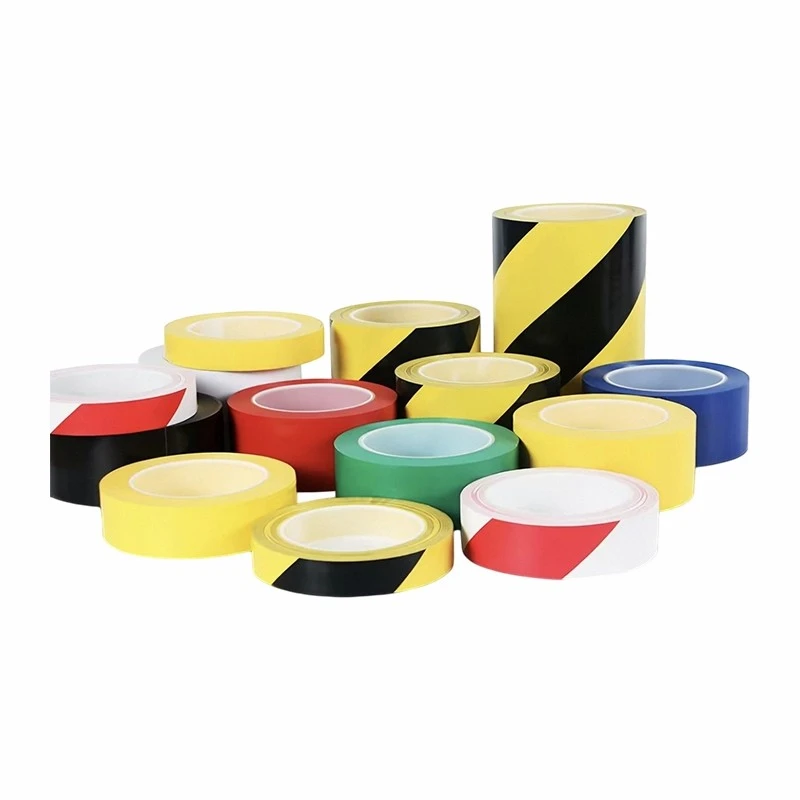
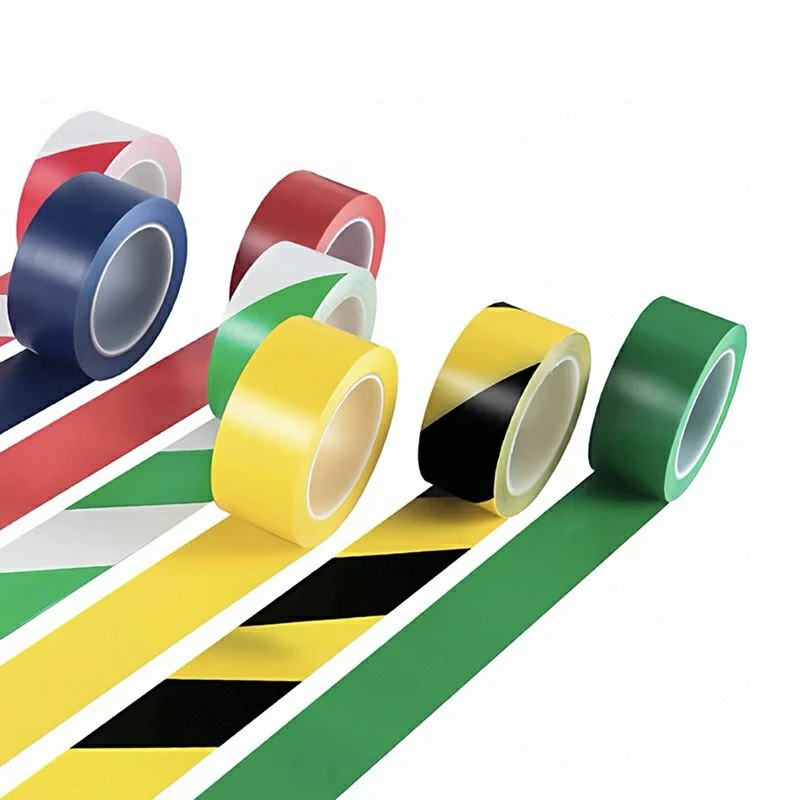
Pigments are also added to PVC tape to give it color. Whether you need Coloured PVC Tape for decoration or for safety marking, pigments are what make it possible. Pigments can be organic or inorganic. Organic pigments are often used for bright and vivid colors, while inorganic pigments are more heat - resistant and fade - resistant, which is great for outdoor applications.
Let's talk about the adhesive on the PVC tape. The adhesive is what makes the tape stick to surfaces. There are different types of adhesives used in PVC tape, such as acrylic and rubber - based adhesives. Acrylic adhesives are known for their strong bonding power, long - term durability, and resistance to weathering and chemicals. They're often used in applications where a permanent bond is required, like in construction and industrial settings.
On the other hand, rubber - based adhesives are more flexible and have good initial tack. They can stick to a variety of surfaces easily and are often used in applications where the tape needs to be repositioned or removed, such as in packaging.
Now, let's take a closer look at some specific types of PVC tape and how their chemical compositions might differ.
Barriere Tape: Barriere Tape is often used to create a barrier or seal. It might have a thicker PVC layer and a special adhesive that can resist moisture, air, and even some chemicals. The plasticizer used in barriere tape should be chosen carefully to ensure that the tape remains flexible even when it's in contact with different substances.
Coloured PVC Tape: As mentioned earlier, pigments are a key part of the chemical composition of coloured PVC tape. The quality of the pigments can affect the colorfastness of the tape. High - quality pigments will ensure that the tape doesn't fade easily, especially when it's exposed to sunlight or other elements.
PVC Lane Marking Tape: For this type of tape, durability is crucial. It needs to withstand heavy traffic and weather conditions. The PVC resin used in lane - marking tape might be more rigid and have a higher level of stabilizers to protect it from UV radiation and abrasion. The adhesive also needs to be strong enough to keep the tape in place on the road surface.
So, why does all this matter to you as a buyer? Well, if you understand the chemical composition of PVC tape, you can choose the right tape for your specific needs. If you're working on a project that requires the tape to be flexible and repositionable, you'll know to look for a tape with a rubber - based adhesive. If you need a tape that can withstand high temperatures and sunlight, you'll know to look for one with good stabilizers and fade - resistant pigments.
If you're interested in purchasing PVC tape for your projects, I'm here to help. Whether you need PVC Builders Tape, PVC Packing Tape, Barriere Tape, Coloured PVC Tape, or PVC Lane Marking Tape, I can provide you with high - quality products. Just get in touch, and we can discuss your requirements and find the best solution for you.
References
- "The Science of Polyvinyl Chloride" by Plastics Institute of America
- "Adhesives and Their Applications" in the Journal of Adhesive Technology
- "Pigments in Polymer Materials" from the Society of Plastic Engineers